
Shipping Restaurant Equipment to Austin, TX: Ovens, Walk-Ins & Kitchen Build-Outs (2026 Guide)
September 26, 2026
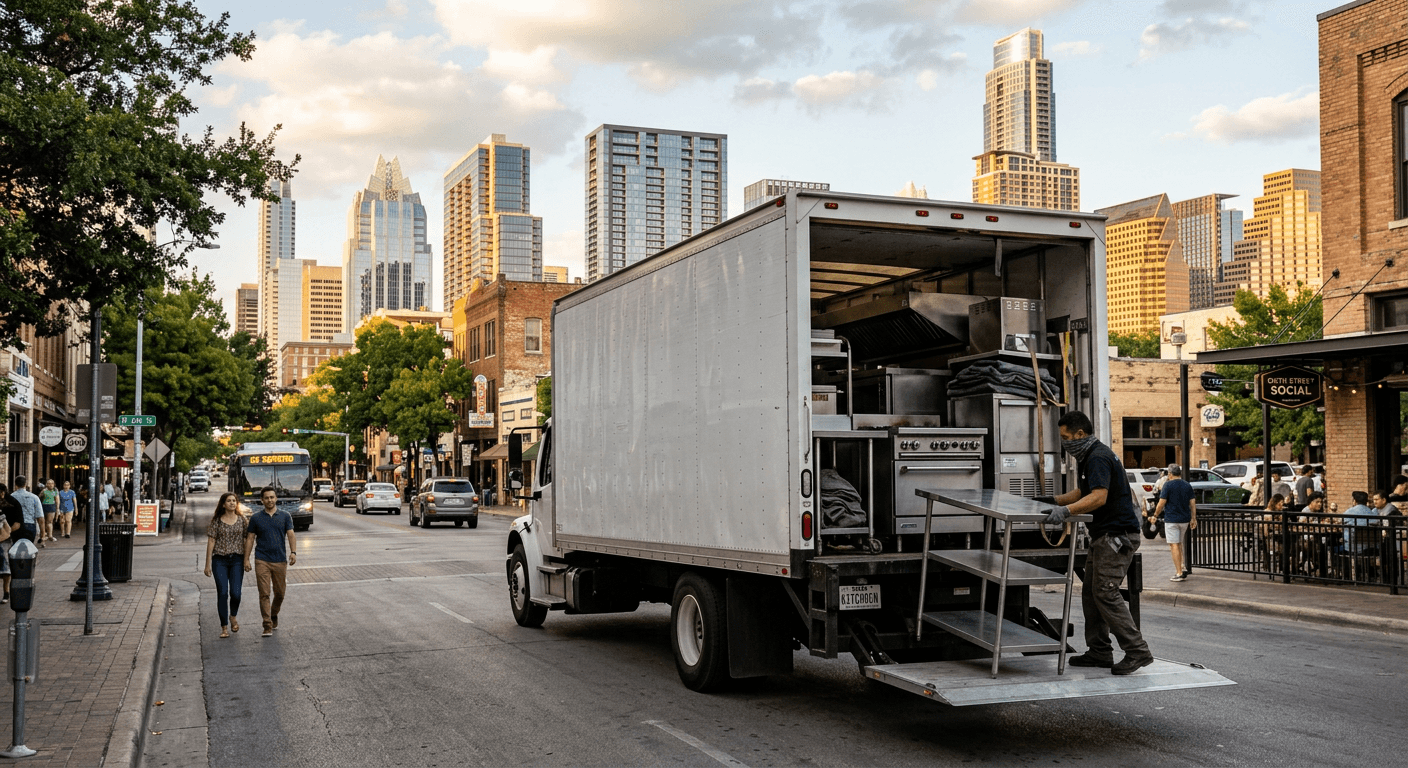
Austin opens restaurants faster than almost any city its size, and a lot of that growth runs on used and relocated equipment — a combi oven bought at auction in Dallas, a walk-in pulled from a closed cafe in Houston, a fryer battery sourced from a dealer out of state. Getting that equipment into an Austin kitchen, a food truck commissary, or a ghost-kitchen bay is its own logistics problem, and the details that decide whether it arrives ready to run are settled long before the truck reaches I-35. This guide walks through how the major categories ship into Austin and what actually drives the schedule and the cost.
Ovens, fryers, and the cooking line
Cooking equipment is heavy, dense, and often too tall or wide to roll through a standard doorway assembled. Deck ovens and combi ovens frequently come apart to clear the opening and get rebuilt on site, combi units must be fully drained before transit so residual water cannot damage the boiler, and fryers have to be drained and degreased because leftover oil is a spill hazard in a trailer. Gas equipment is disconnected and capped by a licensed technician before pickup and reconnected by one at the destination — that is not something a moving crew touches. The mechanics of all of this are covered in our cooking line and oven transport service.
Walk-ins and reach-in refrigeration in the Texas heat
Refrigeration is the least forgiving equipment to ship anywhere, and Austin summers add a real wrinkle. Reach-ins and any self-contained unit have to ride upright so compressor oil stays in the crankcase instead of migrating into the refrigerant lines, and after a move the unit needs to stand upright and powered-off before startup so that oil can settle — rush it and the compressor can slug and fail on the first run. Walk-in panels ship flat-stacked with edge protection because a dented foam core will not seal. In Texas heat, giving a unit its full settle time matters even more, because a compressor that starts hard against a high head-pressure load on a 100-degree day has no margin to spare. The full handling rules are in our commercial refrigeration shipping service.
Food trucks and ghost kitchens
Austin has a deep food-truck and ghost-kitchen scene, and both change the delivery picture. Food-truck build-outs mean fitting and securing equipment in a tight mobile footprint, where weight distribution and tie-down points matter as much as the equipment itself. Ghost-kitchen and commissary bays are often windowless spaces with a single roll-up or a shared dock, so inside placement and sequencing carry the job. In both cases the constraint is rarely the highway — it is the last fifty feet.
LTL vs. dedicated truck vs. white-glove
There are three realistic ways equipment reaches Austin. LTL freight shares trailer space and is the cheapest option for rugged, palletized, crated pieces when you have a dock and a crew to receive them, but it involves multiple handlings and terminal transfers. A dedicated truck carries only your equipment straight through, which cuts handling and tightens the schedule — the right call for a full kitchen or a time-critical opening. White-glove adds liftgate unloading, inside delivery, uncrating, and placement to your floor plan, which is what fragile refrigeration and no-dock ghost-kitchen bays usually need. Most Austin jobs end up as a dedicated or white-glove move once you count the true landed cost of renting a forklift and rounding up labor.
Liftgate, downtown access, and loading docks
Access is where Austin deliveries slip. Many downtown and East Austin restaurant spaces have no loading dock, which means a liftgate — and liftgate capacity is a hard limit. A loaded piece of cooking equipment can exceed what a standard gate is rated to take, which is what decides whether a job needs a dock, a liftgate, or a forklift on site. Downtown adds narrow streets, permit-only curb loading, and tight parking-garage clearances, so the delivery window and the truck size have to be planned against the actual address, not assumed. A quick walkthrough or a few photos of the doorway, hallway, and street frontage prevents almost every access surprise.
Auction pickups from Texas sellers
A lot of Austin equipment comes from auctions and liquidations across Texas, and those sales run on narrow removal windows — often a day or two after the sale closes, with the lot forfeited if it is not out in time. Sales are as-is where-is, so the buyer supplies the labor, rigging, and tools, and many sites require a certificate of insurance naming them before anyone enters. Scheduling the pickup is genuinely the hard part, and it is worth sending photos or a walkthrough before you bid, because removing a lot from a basement or a boxed-in line can cost more than the equipment did.
Crating, timelines, and what drives cost
For anything fragile, high-value, or headed a long way, proper crating and rigging protect the equipment and are usually cheaper than a damage claim — the options run from blanket wrap for short hauls to skidding to a full custom crate, as covered in our crating and rigging service. Timelines depend on origin and service level: a dedicated run from within Texas can land in a day or two, while a consolidated LTL shipment from out of state takes longer through the terminal network. Cost is driven by distance, the number and size of pieces, how much disassembly and crating is required, the service level, and site access on both ends. If something does arrive damaged, note it on the delivery receipt and start a claim right away.
Shipping equipment into an Austin kitchen, food truck, or ghost kitchen? Send us the equipment list, weights, and site details and we will handle crating, transport, and inside placement as one job. Call (866) 216-7742 or request a quote online and a coordinator will reply within one business day.
Frequently asked questions
How long does it take to ship restaurant equipment to Austin?
It depends on the origin and the service level. A dedicated truck coming from within Texas can typically deliver in a day or two, while consolidated LTL freight from out of state moves through terminal transfers and takes longer. The tightest schedules use a dedicated or white-glove move so the equipment is not waiting at a freight terminal.
Do I need a loading dock for delivery in Austin?
Not necessarily. Many downtown and East Austin spaces have no dock, so delivery uses a liftgate and inside placement instead. What matters is matching the equipment weight to liftgate capacity and confirming doorway, hallway, and street access ahead of time, since a heavy loaded piece can exceed a standard liftgate rating.
How is refrigeration protected during a hot Texas summer move?
Refrigeration ships upright so compressor oil stays in the crankcase, and it stands upright and powered-off after delivery so the oil can settle before startup. In Austin heat that settle period matters even more, because starting a compressor too early against a high head-pressure load leaves no margin. Walk-in panels ship flat-stacked with edge protection so the foam cores do not dent.
Can you pick up equipment I bought at a Texas auction?
Yes. Auction and liquidation pickups run on narrow removal windows and are sold as-is where-is, so scheduling and on-site labor are the core of the job. Sending photos or a walkthrough before the sale closes lets us plan the rigging and confirm what removal will involve.
What information do you need for an Austin shipping quote?
The equipment list with makes and models, approximate weights and dimensions, the pickup and delivery addresses, and details about site access on both ends — dock or no dock, doorway widths, stairs, and street constraints. Photos of the equipment and the delivery entrance make the quote far more accurate.
Related
Need to move restaurant equipment?
Nationwide & international. Get a same-day quote.