
Shipping Equipment for Ghost Kitchens and Commissary Kitchens
September 23, 2026
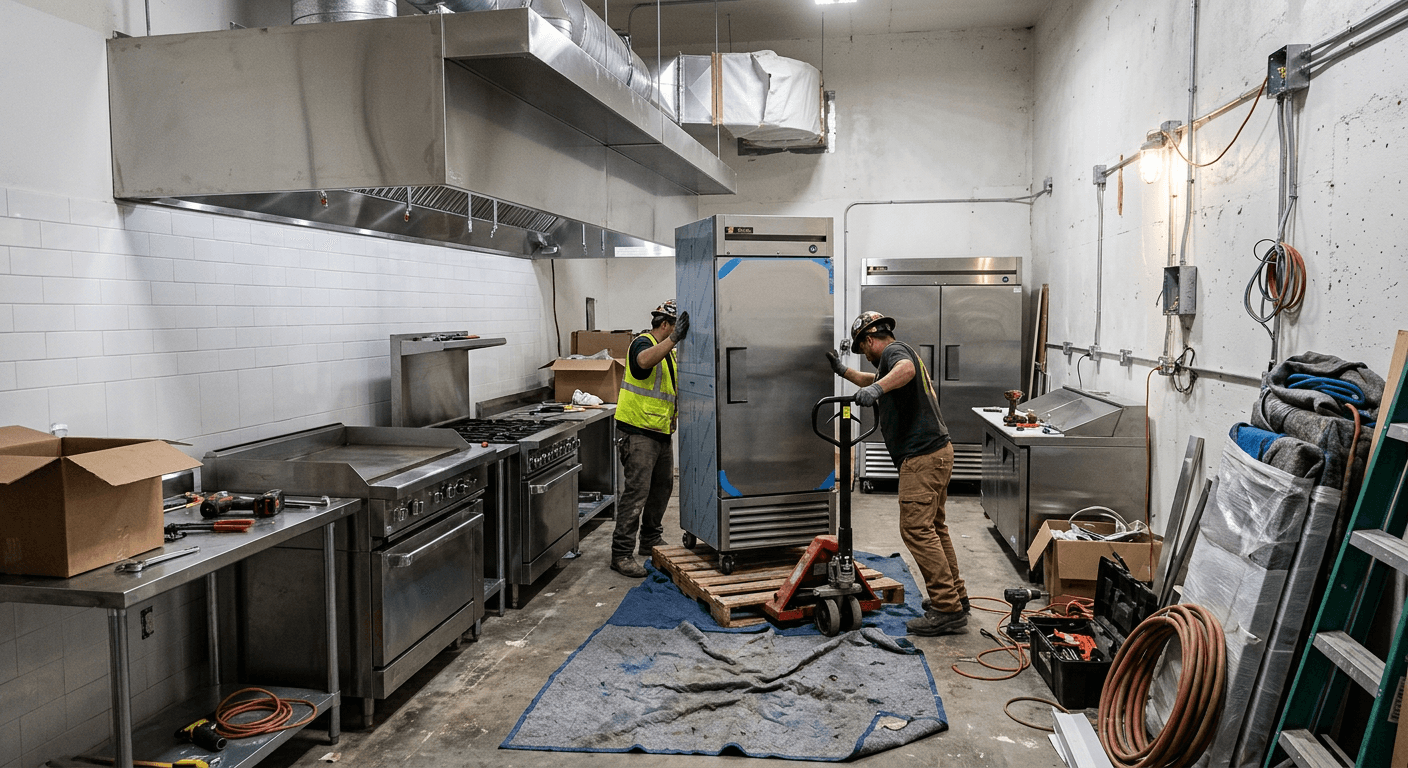
Ghost kitchens and commissary kitchens have changed how food businesses get built, and they have changed how equipment gets shipped and installed. A commissary might house a dozen independent brands under one roof, while a ghost-kitchen build-out often means fitting a full cooking line and refrigeration suite into a windowless bay with a single roll-up door. The equipment for ghost kitchens is the same commercial gear any restaurant runs, but the delivery conditions are tighter, the timelines are shorter, and the margin for error on access is smaller. Here is how the major categories actually move into these spaces.
Hoods and ventilation set the schedule
The exhaust hood and its fire suppression are licensed contractor work, and they tend to set the calendar for everything else in the build. Hoods are bulky and awkward but light for their size, which makes them easy to dent in transit and in a tight doorway, so they ship well-protected and get scheduled to arrive when the contractor is ready to hang them rather than sitting on site collecting damage. Because suppression has to be tagged out before a hood is handled, coordinating the hood delivery with the contractor is part of the move, not an afterthought.
Walk-ins and reach-in refrigeration
Refrigeration is the least forgiving equipment in the build. Walk-in coolers and freezers do not travel as finished boxes — they come apart into panels that ship flat-stacked with edge protection, because a dented foam core will not seal and a walk-in that will not seal runs nonstop without ever holding temperature. Reach-ins ride upright so compressor oil stays where it belongs, and they need to stand upright and powered-off before startup so the oil can settle. The complete set of rules is in our commercial refrigeration shipping service.
The cooking line
Ranges, fryers, combi ovens, and griddles are dense and often too large to roll through the bay opening assembled, so heavy pieces frequently come apart to clear the doorway and get rebuilt inside. Combi ovens must be fully drained before transit, fryers must be drained and degreased so oil is not a spill hazard, and gas equipment is disconnected and capped by a licensed technician before pickup and reconnected by one at the destination. Our cooking line and oven transport service covers how each of these pieces is handled.
Multi-brand build-outs and staging
A commissary build-out rarely arrives as one clean shipment. Several brands worth of equipment may come from different sellers on different trucks over a span of days, which makes staging and sequencing the real work. Everything gets labeled to its brand, its station, and its install order, so the cooking line is not buried behind smallwares when the contractor needs it. Getting the sequence right on paper before anything ships is what keeps a shared bay from turning into a gridlocked storage room.
Timing is the whole job
Ghost-kitchen and commissary leases start the clock the day they are signed, and equipment sourced from auctions, dealers, and relocations tends to become available on someone else’s timeline. Consolidating those origins into a coordinated delivery, rather than a string of unscheduled drop-offs, is what protects the opening date. When one piece is coming from an auction with a hard removal deadline, that deadline usually drives the entire schedule.
Crating, liftgate, and inside delivery
How equipment is protected depends on the haul and the value: blanket wrap for short local moves, skidding for pieces that ride upright strapped down, and custom crates for fragile or high-value units, all covered in our crating and rigging service. Liftgate capacity is a genuine constraint, since a loaded piece of cooking equipment can exceed what a standard gate takes, and most ghost-kitchen bays are windowless with no dock — so white-glove inside delivery, where the crew places each unit to the floor plan, is often the only practical way in.
What drives the cost
The price of a ghost-kitchen or commissary move comes down to a handful of factors: how many pieces and how large, the distance and number of origins, how much disassembly and crating each piece needs, whether the site has a dock or requires a liftgate and inside placement, and the number of stairs or tight turns between the truck and the final spot. A walkthrough or a set of photos before the quote is what keeps all of that off move day and out of the final invoice as a surprise.
Related services for ghost kitchen builds: commercial refrigeration shipping, cooking line and oven transport, crating and rigging, walk-in cooler and freezer shipping, and commercial range and hood system shipping.
Building a ghost kitchen or stocking a commissary? Send us the equipment list, origins, and site details and we will crate, consolidate, and place it to your plan as one project. Call (866) 216-7742 or request a quote online and a coordinator will reply within one business day.
Related
Need to move restaurant equipment?
Nationwide & international. Get a same-day quote.