
You Bought the Restaurant Equipment. Now What? We'll Come Pick It Up.
September 29, 2026
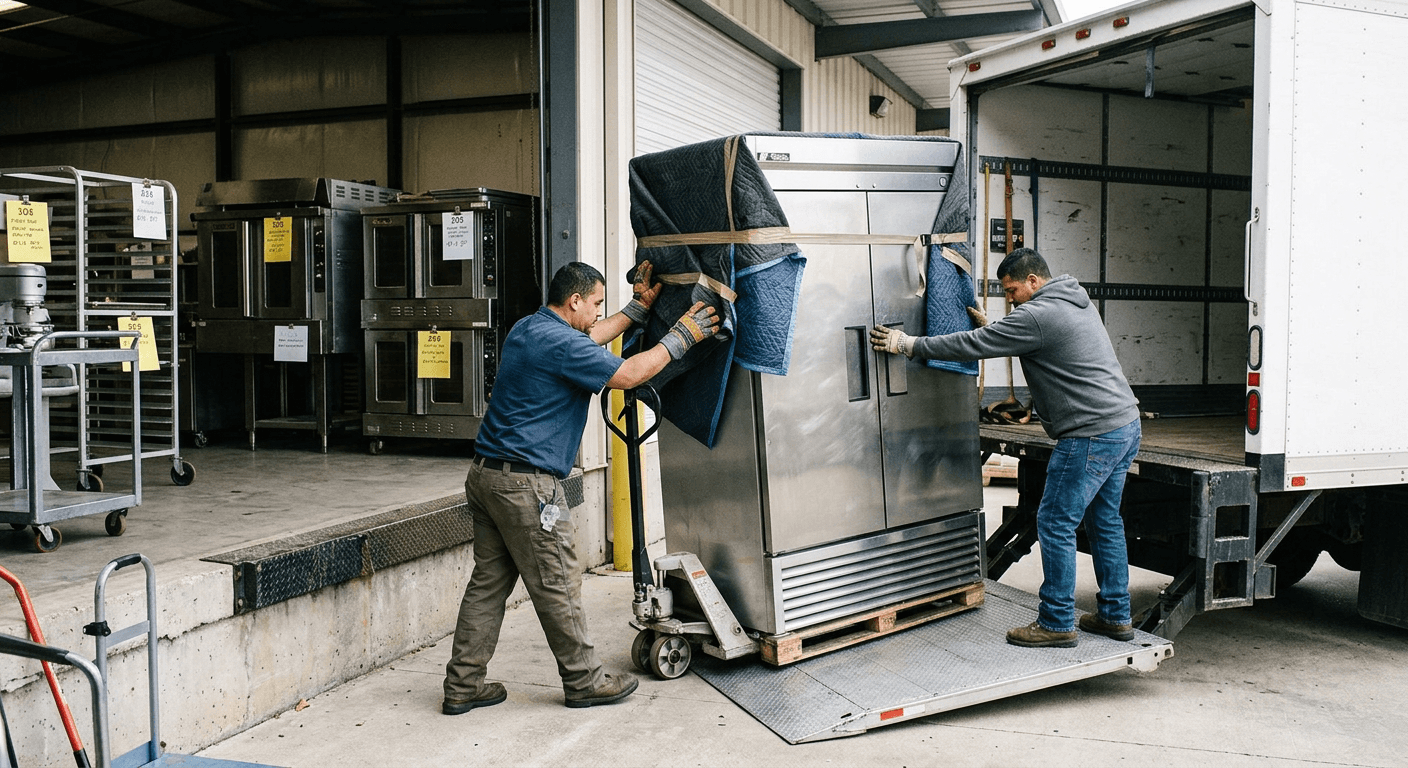
The auction closed, the invoice is paid, and the equipment is yours. There's just one problem: it's sitting in someone else's building, you have a pickup deadline, and a 600-pound reach-in doesn't fit in the back of your SUV.
That gap between buying equipment and having it running in your kitchen is where most of the stress lives. Auction lots sell as-is, where-is, which means the buyer supplies the labor, the rigging, and the truck. Private sellers are usually no different — once the money changes hands, getting the unit out is your problem. Here is how that job works when you hand it to us, step by step, from your side of the table.
Step 1: You send us what you bought
Start with the basics: the lot number or listing link, the pickup address, the pickup deadline, and the delivery address. Add a few photos — the unit itself, the spec plate if you can get to it, and the path it has to travel out of the building. Photos of a basement stairwell or a tight hallway tell us more than any description. If you have not bid yet, send the listing before the sale closes; removal can be the most complicated part of the purchase, and it is better to know that before you win.
Step 2: One all-in quote within one business day
A coordinator reviews what you sent and comes back within one business day with one all-in price covering pickup, freight, and white-glove placement at your kitchen. You are not stitching together a rigging crew, a freight broker, and a delivery team — it is one quote and one point of contact. If the photos raise a question, like whether a unit clears a doorway assembled, we ask it now rather than on pickup day.
Step 3: We coordinate with the auction house or seller
Before anyone shows up, we confirm the release with the auction house or seller, the removal window, building hours, and whether there is a loading dock or only a street door. Many auction sites and commercial buildings require a certificate of insurance naming them before a crew can enter, so we arrange that ahead of time. Our auction pickup and liquidation service covers the details of working inside tight removal windows.
Step 4: The crew arrives and loads it right
On pickup day the crew works with disconnect-ready equipment — gas, water, and electrical already disconnected by the appropriate licensed trade. Each piece is protected based on what it is and how far it is going: blanket-wrapped for shorter hauls, skidded when it needs to ride upright, or custom-crated when it is fragile or high-value. It is strapped, loaded by liftgate, and rides on air-ride freight. Refrigeration stays upright the whole way. Our crating and rigging service explains how we choose between those options and what happens when a unit cannot leave the way it came in.
Step 5: A coordinator and tracking while it moves
Once the equipment is on the truck, you have a dedicated coordinator and tracking for the shipment. If a schedule changes on either end — your contractor needs another day, the building moves its delivery window — you have one person to call instead of chasing a carrier dispatch line.
Step 6: Delivery, uncrating, and placement
At your kitchen, the crew brings the equipment inside, uncrates it, removes the packaging, and positions and levels it where your kitchen plan says it goes. Your installers — the licensed plumber, electrician, or gas technician — then make the final connections. Refrigeration should stand upright before it is powered on after transport, so plan for that when you schedule your trades.
What to have ready before pickup
- Lot number or invoice number for every piece
- Release paperwork from the auction house or seller
- The exact pickup deadline and building hours
- Loading dock details, or confirmation that liftgate service is needed
- Dimensions and weight, or clear photos of each spec plate
- Delivery access notes: stairs, tight doors, elevators, narrow hallways, parking limits
Common mistakes buyers make
- Missing the removal deadline. Auction removal windows are often a day or two, and equipment left past the deadline can be forfeited.
- Assuming the seller will disconnect or load it. As-is, where-is usually means no dock help, no forklift, and no one to unhook the gas line.
- Forgetting doorway measurements. A unit that came into the old building assembled may not fit through your new door the same way.
- No COI for the building. Without a certificate of insurance naming the site, the crew may not be allowed through the door.
Have more questions about liftgate versus white-glove, crating, or insurance? Our FAQ covers the most common ones. And if something does arrive damaged, our claims page explains exactly how to document and report it.
Bought it? We'll go get it.
Send us the listing and pickup address and a coordinator will reply within one business day with one all-in price for pickup, shipping, and placement.
Related
Need to move restaurant equipment?
Nationwide & international. Get a same-day quote.